Preventive Care
Can a Cavity Heal on Its Own? What Fluoride Can and Can't Reverse
The hygienist taps a back tooth and says, "We'll keep an eye on this one." Or you notice a chalky white patch near your gumline, and a quick search promises that cavities can be reversed at home with the right toothpaste, oil pulling or a special diet.
Some of that is true, and some is wishful thinking. Whether decay can heal depends on how far along it is.
Can a cavity heal on its own?
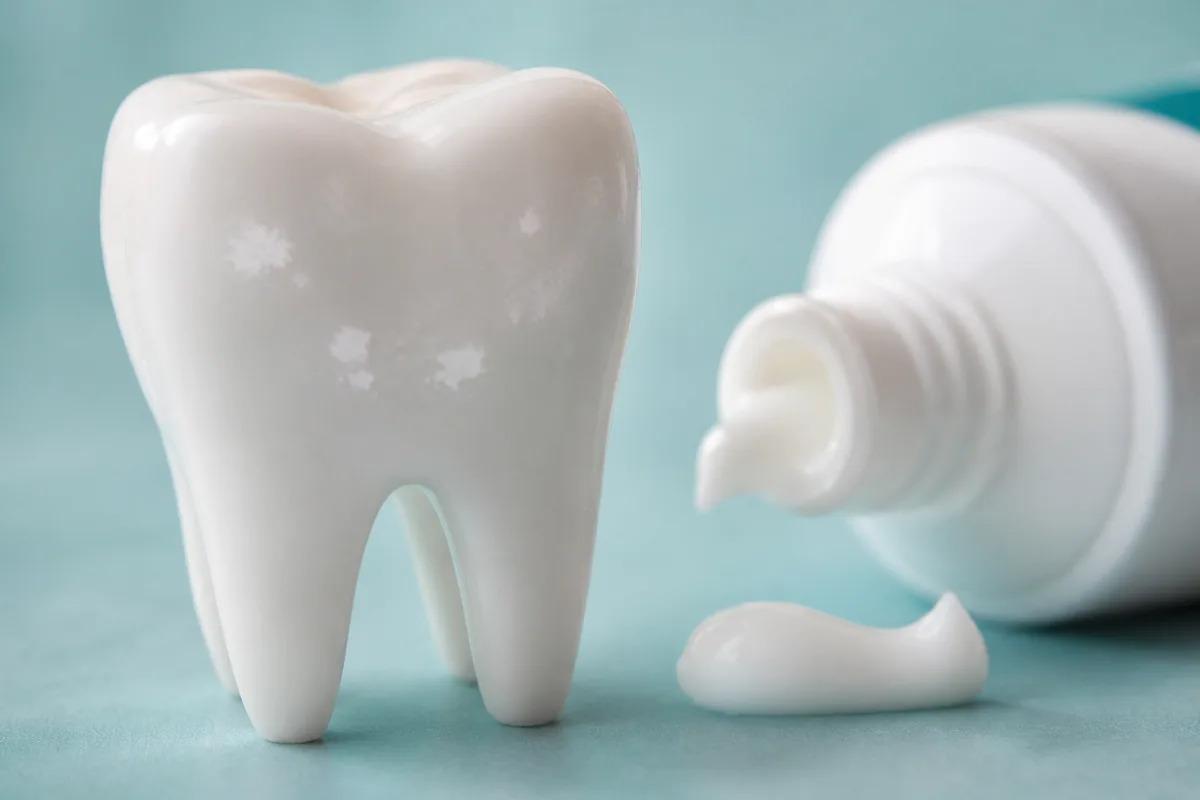
Short answer: Only at the very start. Early decay that has softened the enamel without breaking through it, often seen as a chalky white spot, can harden again and stop with fluoride, saliva and fewer sugary or acidic snacks and drinks. Once decay has made a hole or reached the softer dentin underneath, the lost tooth structure cannot grow back, and the tooth needs a dentist's treatment, usually a filling.
Part of the confusion is the word itself: most people say "cavity" for any decay, while dentists usually mean the hole. The National Institute of Dental and Craniofacial Research describes a daily tug-of-war: acid from plaque bacteria pulls minerals out of enamel, and saliva and fluoride put them back. When losses outpace repairs, a white spot appears, and at that stage, the NIDCR says, decay can still be stopped or reversed. If it continues, the enamel breaks down into a cavity, which the institute describes as permanent damage that needs a filling.
Where is the point of no return?
The turning point is a broken surface. While the outer layer of enamel is intact, the tooth can rebuild the mineral beneath it. Once that surface caves in, plaque packs into a pocket a toothbrush cannot reach, and no amount of fluoride will fill it back in. The stages look roughly like this:
| Stage | What you might notice | Can it heal? | What usually happens |
|---|---|---|---|
| Early demineralization (white spot) | A chalky white patch near the gumline or in a groove; no hole, usually no pain | Often, yes. It can harden and stop growing. | Fluoride, better habits and a recheck at a later visit |
| Decay through the enamel surface | A rough spot or tiny pit that may catch floss; often no pain yet | No. The hole stays, though its growth can sometimes be slowed. | Usually a small filling |
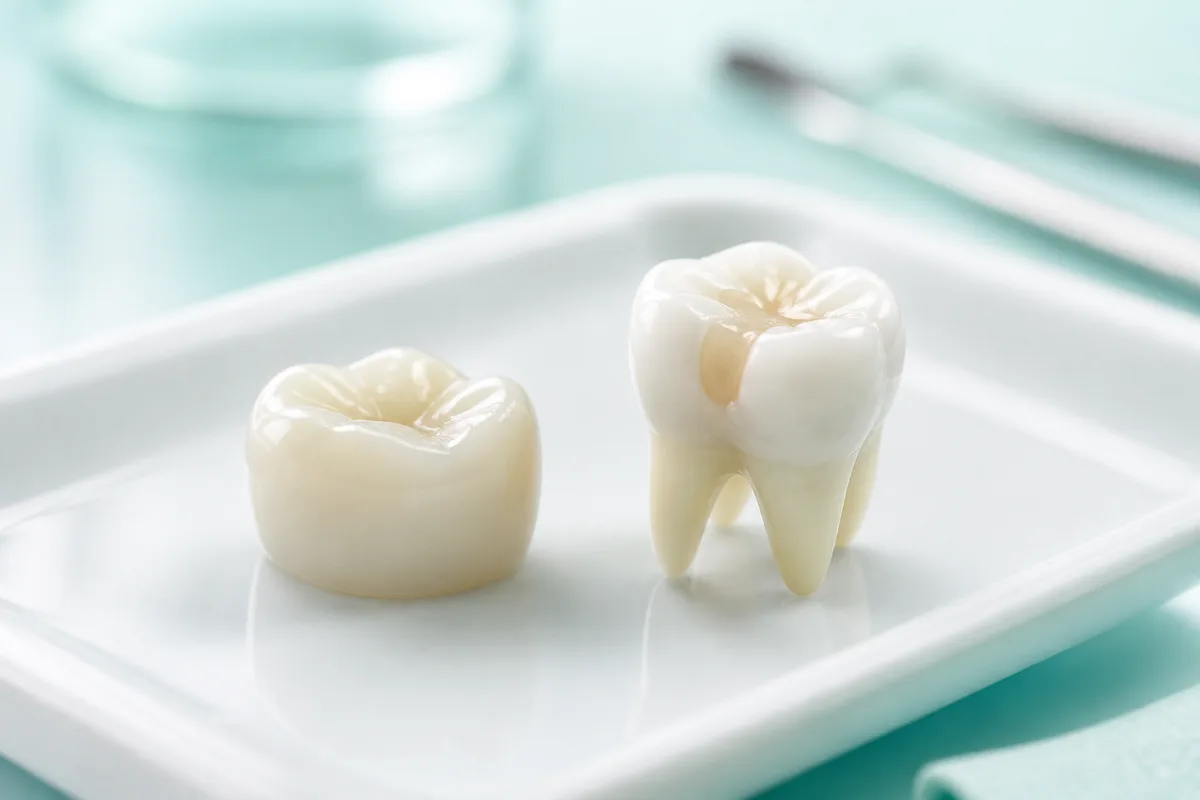
| Decay in the dentin | Twinges with sweets or cold, a dark spot, food catching; sometimes nothing | No | A filling, or a crown if too little sound tooth is left |
| Decay reaching the nerve (pulp) | Throbbing, or pain that lingers after hot or cold or wakes you at night | No | Root canal treatment or removing the tooth |
| Abscess | Swelling, a pimple-like bump on the gum, a bad taste, sometimes fever | No. It may quiet down, but the infection stays. | Prompt treatment of the infection and the tooth |
Decay tends to speed up once it gets past the enamel. Dentin, the layer underneath, is softer, carries less mineral and is threaded with tiny channels that lead toward the nerve. Decay there often spreads sideways, hollowing out the tooth beneath a surface that can still look nearly normal. That is how a small dark dot can turn out to be a sizable cavity.
How does a dentist tell an early spot from a real cavity?
By combining a close look, X-rays and, often, time. No single test settles every case.
- A careful look at a dry tooth. Saliva hides early changes, so the tooth is dried and checked under bright light. An active early lesion tends to look chalky and matte. One that has stopped often looks shiny and smooth, sometimes with a brown stain that is more scar than live decay.
- A gentle touch, not a jab. Pressing hard on a weakened spot with a sharp instrument can break the surface everyone is trying to save, so dentists use a light touch to feel for softness or roughness.
- X-rays for the spaces between teeth. Decay between back teeth is often invisible from above, and bitewing X-rays show how deep a shadow reaches. As a rough rule, a shadow limited to the enamel is often treated with fluoride and watched, while one that has clearly reached the dentin more often needs a filling. X-rays cannot show whether the surface has actually broken, so they are read alongside the exam.
- Monitoring. "Let's watch it" should mean a plan: a note or photo in your chart, steps at home and a recheck at a later visit. A spot that stays the same or hardens stays on watch. One that grows or softens moves toward treatment.
- Your risk level. Frequent snacking, a dry mouth and recent cavities make a dentist more likely to treat a borderline spot than to watch it.
Borderline spots are a judgment call, so it is reasonable to ask to see the X-ray or a photo and what would change the recommendation.
What helps an early spot remineralize?
The goal is to tilt the tug-of-war so the tooth spends more time rebuilding than dissolving:
- Fluoride toothpaste, twice a day. Brush for two minutes, spit out the excess and skip the rinse so a little fluoride stays on the teeth. The bedtime brush matters most because saliva flow drops during sleep.
- Clean the spot itself. A white spot forms where plaque sat undisturbed. Angle the brush toward the gumline, and if the spot is between teeth, floss daily so fluoride and saliva can reach it.
- Fewer acid attacks, not just less sugar. How often you eat or sip sugary or acidic things matters more than the total amount. A soda finished with lunch does less harm than the same soda sipped all afternoon.
- Keep saliva flowing. Saliva neutralizes acid and carries the calcium and phosphate that rebuild enamel. Water, sugar-free gum after meals and getting a dry mouth treated all help.
- Drink fluoridated tap water if yours has it. The NIDCR notes that most bottled water does not contain enough fluoride to prevent decay.
What a dentist may add
When your risk is higher or a spot is not improving, a dentist may recommend:
- Prescription-strength fluoride toothpaste, which carries several times the fluoride of a regular tube and is typically used at bedtime as directed.
- Fluoride varnish, a sticky coating painted on at a visit that stays on the teeth for a few hours.
- Sealants, mainly preventive, but also used to seal over some early, unbroken lesions in the grooves of back teeth. See how dental sealants are placed.
- More frequent checkups and professional cleanings, so a changing spot is caught early.
Two caveats. Remineralization is slow, measured in months rather than days, and it only works if whatever caused the spot changes. And a healed spot often stays visible: whiter than the enamel around it or stained brown, even though it is hard and no longer active. If the look bothers you, our guide to white spots on teeth covers the cosmetic options.
What about silver diamine fluoride?
Silver diamine fluoride (SDF) is a liquid some dentists brush onto an existing cavity to stop it from getting worse. It does not rebuild the missing tooth, but it can arrest some lesions without drilling. The American Dental Association's overview of SDF notes that using it on cavities is an off-label use (its FDA clearance is for tooth sensitivity), that it needs repeat applications to keep working, and that its main drawback is a permanent black stain on the treated decay.
That trade-off is why it tends to come up for very young children, older adults with decay on exposed roots and people who cannot easily sit through conventional treatment. A treated tooth may still need a filling later, so if SDF is suggested, ask how often it would need reapplying and how the tooth will look.
Do hydroxyapatite and other "remineralizing" toothpastes work?
Possibly, for early spots, but the evidence is thinner than the marketing. Hydroxyapatite is the main mineral in enamel, and toothpastes with a synthetic version are sold as a fluoride-free way to repair it. Some studies suggest they can help early lesions remineralize, but that research is smaller and shorter-term than the decades of evidence behind fluoride, and results vary.
- If you would rather avoid fluoride, talk it over with your dentist first, especially if you get cavities often.
- Many toothpastes labeled "enamel repair" or "remineralizing" are fluoride toothpastes with a different name on the box. Check the active ingredient.
- No toothpaste, rinse, supplement or diet can regrow tooth structure once a hole has formed. Claims that a product "heals cavities" usually blur that line.
Why is "waiting it out" risky?
Because you cannot see how deep decay goes, and the deeper it goes, the faster it tends to move. Many cavities cause no symptoms at first, and some not until they are fairly large.
Each stage also changes the repair. Caught early, a cavity usually means a small tooth-colored filling. Left longer, the filling gets bigger, and once too little sound tooth remains the conversation shifts to whether you need a crown instead of a filling. If decay reaches the nerve, the options become root canal treatment or removing the tooth. And when a painful tooth suddenly stops hurting, that can mean the nerve has died, not that the tooth has healed.
Watching an intact white spot on a dentist's plan, with fluoride and rechecks, is sound care. Hoping a tooth that already twinges will settle down by itself is not.
What are the signs a cavity has gotten worse?
The most common signs that decay has moved past the early stage are:
- Sensitivity to sweets, cold or heat that keeps coming back in the same tooth
- Pain when you bite down on one spot
- A visible hole, pit or dark brown or black spot
- Food catching in the same place, or floss that shreds between two teeth
- A rough or sharp edge you can feel with your tongue
- A bad taste or odor that seems to come from one tooth
Cracks, gum recession and worn fillings can cause similar symptoms, but any of them is worth an exam before your next routine visit.
When to call a dentist right away
- Throbbing tooth pain, or pain that lingers long after something hot or cold
- Pain that wakes you at night or does not respond to over-the-counter pain relievers
- Swelling of the gum, cheek or jaw
- A pimple-like bump on the gum, or a foul taste with pus
- A tooth that has broken apart
Go to the emergency room or call 911 if… swelling is spreading toward your eye or down your neck, you have trouble breathing or swallowing, you cannot open your mouth normally, or you have a fever along with facial swelling. These can be signs that a dental infection is spreading, and they need hospital care first.
We keep room for dental emergencies and will get you seen as quickly as we can — you do not need to be an existing patient.
Questions to ask at your next dental visit
- Is this spot early decay that can harden, or has the surface already broken?
- Can you show me what you see on the X-ray or in a photo?
- If we are watching it, when will we recheck it, and what would make you recommend a filling?
- Would prescription-strength fluoride or fluoride varnish help me?
- Would sealants make sense on any of my back teeth?
- What is driving my cavity risk, and which habit is worth changing first?
If a spot has been "one to watch" for a while, or a tooth has started to twinge, get it checked while the options are still small. Rio Hondo Dental Office is at 8514 Paramount Blvd. in Downey, and our team speaks English and Spanish. Call (562) 928-5559 or request an appointment; we offer evening appointments Monday through Thursday and Saturday mornings.
Have questions about your smile?
Dr. Sameer Aljanedi and the team at Rio Hondo Dental Office are here to help. Se habla español.