Oral Health
Diabetes and Gum Disease: How Each Makes the Other Worse

You check your blood sugar, you know your A1c, and you watch what you eat. Then at a dental cleaning the hygienist mentions that your gums bled in several spots and that a few of the pockets around your teeth have gotten deeper. It can feel like one more thing to keep track of, but it is closely tied to the diabetes care you are already doing.
Diabetes and gum disease feed each other. Understanding how that works makes it easier to protect your teeth, and caring for your gums may make your blood sugar a little easier to manage too.
Does diabetes cause gum disease, and can gum disease affect blood sugar?
Short answer: Yes, the link runs both ways. People with diabetes are more likely to develop gum disease, and it tends to be more severe when blood sugar is poorly controlled. In turn, an active gum infection can make blood sugar harder to control. Treating gum disease has been linked to modest improvements in blood-sugar control, so dental care is part of managing diabetes, not separate from it.
The National Institute of Dental and Craniofacial Research notes that people with poor blood glucose control get gum disease more often and more severely than people whose diabetes is well controlled. That is the encouraging part: better control lowers the risk.
Why does diabetes make gum disease worse?
Several things happen at once when blood sugar runs high:
- Infection-fighting cells don't work as well. The CDC explains that high blood sugar can weaken white blood cells, the body's main defense against infections in the mouth.
- Bacteria get more fuel. When glucose is high in the blood, it is higher in saliva too, and the bacteria in plaque feed on it.
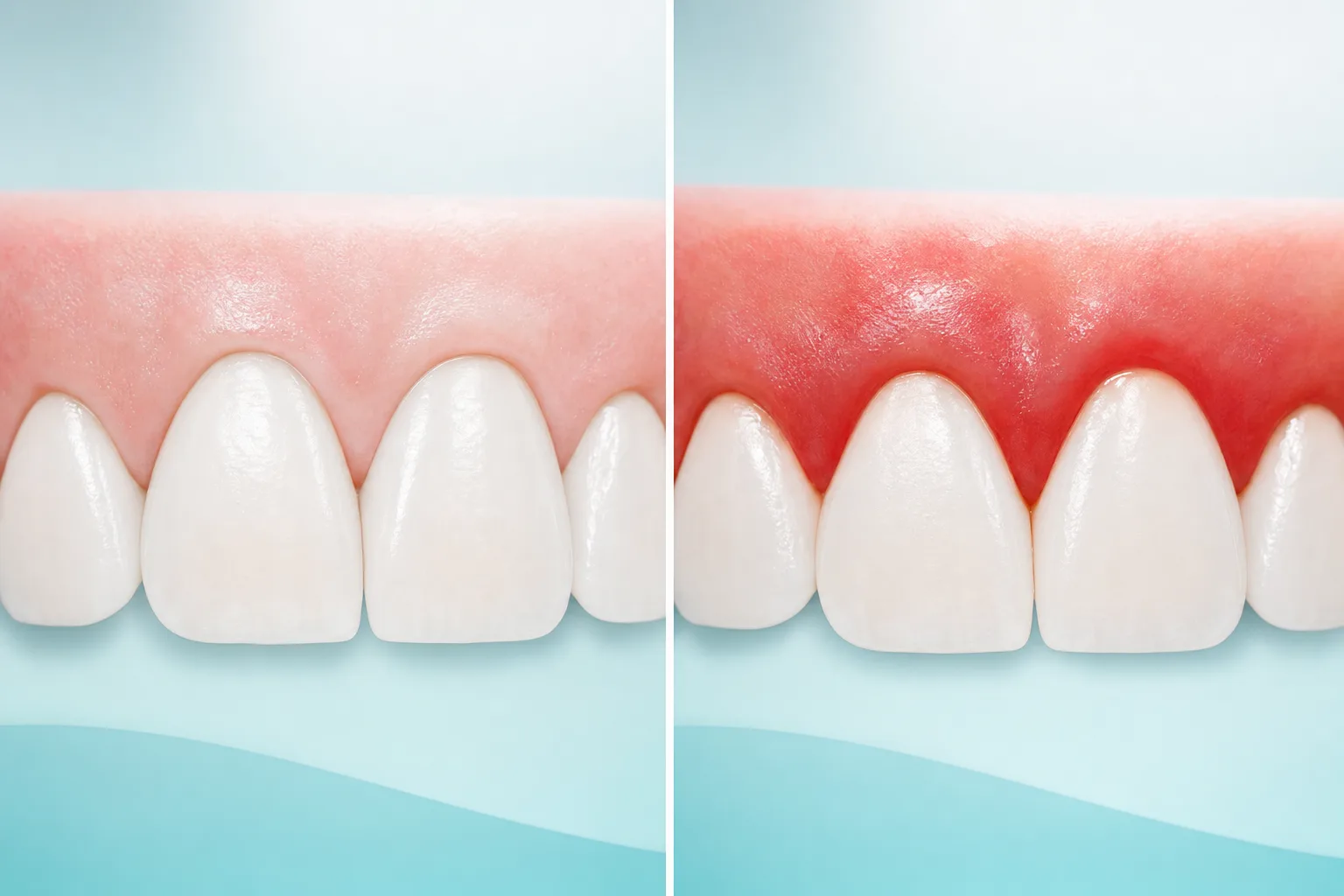
- Inflammation runs hotter. Diabetes tends to exaggerate the body's inflammatory response, so the gums react more strongly to the same amount of plaque. Over time, that inflammation breaks down the gum attachment and the bone that hold teeth in place.
- Healing is slower. Changes in small blood vessels slow tissue repair, so gums take longer to recover from irritation and from treatment.
Smoking adds to all of this. It reduces blood flow to the gums, hides the bleeding that would otherwise warn you, and makes both gum disease and diabetes harder to control.
How can gum disease raise blood sugar?
Gum disease is a long-lasting infection, and infection makes blood sugar harder to keep in range. Inflamed gum tissue releases chemical signals into the bloodstream that can make the body's cells respond less well to insulin. The more widespread the infection, the more inflammation the body has to deal with.
That is why treating gum disease matters beyond the mouth. Clinical studies, and reviews that pool their results, have found that people with diabetes who receive periodontal treatment such as a deep cleaning tend to see a modest improvement in blood-sugar control over the following months compared with people who are not treated. The CDC puts it simply: treating gum disease may help lower your blood sugar over time. It is a helpful addition to your diabetes care, never a replacement for your medication, diet or activity plan.
What other mouth problems does diabetes cause?
Gum disease is not the only problem to watch for:
- Dry mouth. High blood sugar can reduce saliva, and so can many medications people with diabetes often take for blood pressure or other conditions. Less saliva means more cavities, especially along the gumline and on exposed roots. Our article on dry mouth and what actually helps covers the practical fixes.
- Thrush. This fungal infection causes sore white patches, or sometimes red, irritated areas, on the tongue, cheeks or under a denture. Extra sugar in saliva and a dry mouth make it more likely, and it usually needs a prescription antifungal.
- Slower healing. Mouth sores, extraction sites and gum tissue after treatment may take longer to heal, and small cuts are more likely to become infected.
- A burning feeling in the mouth. Some people notice burning on the tongue or the roof of the mouth. It can come from dry mouth, thrush or nerve changes, and it is worth mentioning to both your dentist and your physician.
- Changes in taste. Food may taste duller or different.
What are the warning signs of gum disease?
Gum disease usually does not hurt until it is advanced, so look for the signs instead of waiting for pain:
- Gums that bleed when you brush or floss
- Red, swollen or tender gums
- Gums pulling back from the teeth, making them look longer
- Bad breath or a bad taste that does not go away
- Pus between the teeth and gums
- Teeth that feel loose, are shifting or have new gaps between them
- A change in how your teeth fit together when you bite, or in how a partial denture fits
Bleeding is the earliest and most common sign, and it is not normal, even if it has been happening for years. In the earliest stage, gingivitis, the damage can be reversed with a professional cleaning and better daily care. Once bone has been lost, that loss cannot be undone, but the disease can usually be controlled. Our guide to which stages of gum disease are reversible explains the difference.
When to call a dentist right away
Call a dentist the same day if you notice:
- Swelling in the gums, jaw or face, or a painful pimple-like bump on the gum, which can be signs of an abscess
- A tooth that has suddenly become loose or painful to bite on
- Mouth pain or swelling along with blood sugar readings that are running unusually high, since an infection can push glucose up (call your physician too)
- Bleeding after dental treatment that does not slow after 15 to 20 minutes of firm pressure
Go to the emergency room or call 911 if swelling spreads toward your eye or down your neck, you have trouble breathing or swallowing, or you have a fever with facial swelling. Call 911 as well if someone having a low blood sugar becomes unresponsive, has a seizure or cannot swallow safely. For dental problems that do not need a hospital, we keep room for dental emergencies and will get you seen as quickly as we can. You do not need to be an existing patient.
How should you prepare for a dental visit if you have diabetes?
A little planning makes visits safer:
- Tell the dental team about your diabetes and your most recent A1c. The number helps the dentist judge your risk of gum disease and how well you are likely to heal after treatment.
- Bring a complete medication list. Include insulin and any other diabetes medications, plus blood thinners, blood pressure pills and supplements. Some of them affect bleeding, healing or what the dentist can safely prescribe.
- Time the appointment around your meals and medication. A morning visit after a normal breakfast and your usual dose often works well. Do not skip a meal before your appointment, especially if you take insulin or a medication that can cause lows.
- Check your blood sugar before you sit down. Bring your meter or have your monitor handy. If the reading is unusually low or high, tell the team before treatment starts, since the dentist may decide to postpone non-urgent work.
- Keep a fast-acting sugar with you. Glucose tablets, a small juice or a regular (not diet) soda all work. Tell the team right away if you feel shaky, sweaty, lightheaded or confused during the visit.
- Plan for numbness afterward. If you will be numb for a few hours, or a procedure will make chewing hard for a day or two, ask your physician ahead of time how to handle meals and medication. Do not change your insulin dose on your own.
How is gum disease treated when you have diabetes?
The treatment is the same as for anyone else, but follow-up tends to be closer. For gingivitis, a professional teeth cleaning and better brushing and flossing at home are usually enough. Once pockets have formed and bone loss has started, the usual first step is a deep cleaning, also called scaling and root planing. The area is numbed, and hardened tartar and bacteria are removed from the root surfaces below the gumline so the gums can heal and tighten. It is often done over one to four visits, a section of the mouth at a time. The steps are laid out on our gum disease treatment page.
About four to eight weeks later, the gums are measured again to see how they responded. After that, most people move to periodontal maintenance visits, commonly every three to four months rather than every six, because bacteria build back up in treated pockets within about that time. Your dentist may shorten or lengthen that interval based on how your gums respond and how steady your blood sugar is. Areas that do not respond may need more advanced periodontal care, such as gum surgery.
There are honest limits to know about. Teeth can feel sensitive to cold for a few days to a few weeks after a deep cleaning, and gums may shrink a little as the swelling goes down, making some teeth look longer. Dental plans vary in how many maintenance visits they cover each year, so ask before you assume. And treatment controls gum disease rather than curing it. Without regular maintenance and daily care, it tends to come back.
What daily habits protect your gums when you have diabetes?
The habits that protect everyone's gums matter even more with diabetes:
- Brush twice a day for two minutes with a soft-bristled brush and fluoride toothpaste, angling the bristles toward the gumline.
- Clean between your teeth once a day with floss, small interdental brushes or a water flosser, whichever you will actually use.
- If you wear a denture or a partial, take it out and clean it every day, and leave it out overnight unless your dentist advises otherwise.
- Keep your regular dental visits instead of waiting for pain.
- Keep working with your care team on blood-sugar control. It protects your gums as much as anything you do at the sink.
How can your dentist and physician work together?
Your dentist and physician work in different offices, but your care goes better when they share information:
- Bring your latest A1c to dental visits, or give the dental office permission to request it from your physician.
- Tell your physician if you have been diagnosed with gum disease or are starting treatment for it, since an infection can affect your readings.
- Mention mouth symptoms such as dryness, burning, thrush or slow-healing sores at your diabetes checkups.
- If you smoke, ask either office for help quitting. It is one of the most useful things you can do for both conditions.
Questions to ask at your next dental visit
- Do my gums show signs of gum disease, and what were my pocket measurements?
- Given my diabetes, how often should I come in for cleanings or maintenance visits?
- Do I need a deep cleaning, and what happens if I wait?
- Do you see signs of dry mouth, thrush or new cavities?
- Is there anything I should share with my physician?
If you have diabetes and your gums bleed, feel tender or have not been checked in a while, it is worth a visit. Rio Hondo Dental Office is at 8514 Paramount Blvd. in Downey, and our team speaks English and Spanish. Call (562) 928-5559 or request an appointment, and mention your diabetes when you book so we can find a time that works with your meals and medication.
Have questions about your smile?
Dr. Sameer Aljanedi and the team at Rio Hondo Dental Office are here to help. Se habla español.